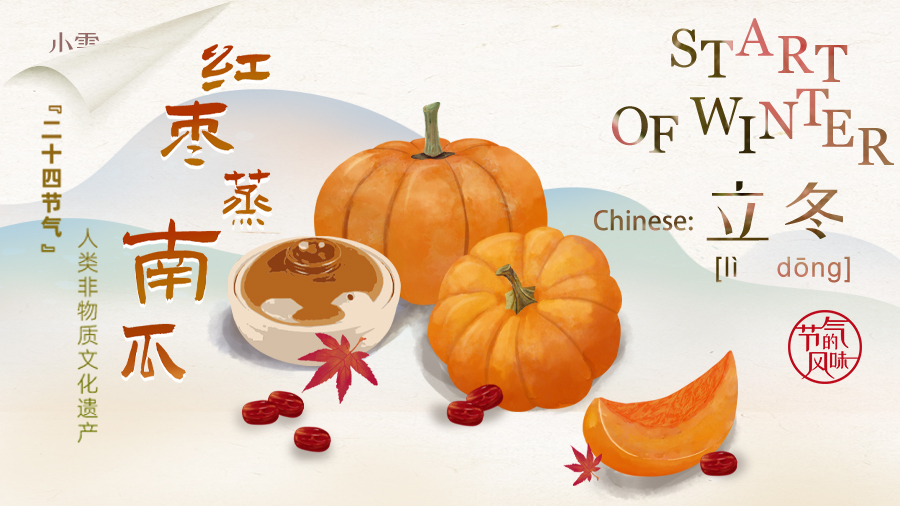
Start of Winter
Overview
The Start of Winter marks the 19th solar term in the traditional Chinese solar calendar. This term begins typically on Nov 7 or 8 and extends to Nov 21 or 22. It signifies the end of the harvest season and the onset of winter, a time when crops harvested in autumn are stored for the colder months. While ancient Chinese considered this the start of winter, meteorologically, the actual beginning of winter varies due to climatic differences across regions.
Cultural Significance and Traditions
In ancient China, Start of Winter was an important seasonal festivity. Emperors would perform rituals to welcome the winter, such as fasting and bathing prior to the event, followed by leading ceremonial activities in the suburbs. The day was seen as a marker for transitioning into winter, although it does not coincide exactly with meteorological winter, which varies yearly and by region across China.
One of the most enduring customs associated with Start of Winter is the consumption of dumplings. This tradition is rooted in a legend from the Eastern Han Dynasty (25-220) when "Medical Saint" Zhang Zhongjing crafted ear-shaped dumplings to combat frostbite among the people of Henan during a typhoid epidemic. Dumplings, therefore, became a symbol of warmth and health, leading to the saying, "Eat dumplings on Start of Winter Day, or your ears will be frostbitten."
In South China, particularly in Fujian, Guangdong, and Taiwan, people partake in "nourishing the winter," a practice that involves consuming high-calorie foods like chicken, duck, beef, and mutton stewed with traditional Chinese herbs. This cuisine is believed to boost health and prepare the body for the cold months ahead.
Health Practices
The Start of Winter coincides with regional customs such as the Yifan Festival celebrated by the Mulam ethnicgroup in Guangxi. This festival, held every three to five years around this solar term, involves elaborate rituals including the invitation of deities, offerings, singing, and traditional performances.
In Tianjin, the custom entails eating dumplings filled with Chinese pumpkins, while in Wuxi, residents enjoy "tuanzi," a type of glutinous rice ball, to savor the recently harvested autumn grains. Offering sacrifices to ancestors is another common practice, especially in regions like Benxi, Liaoning, where the Manchu and Han Eight Banners burn incense and conduct ceremonial offerings at this time.
Modern Celebrations and Cultural Activities
In contemporary times, Start of Winter continues to hold cultural significance, serving as a reminder of tradition and community. It is marked by various culinary events and social gatherings, bridging the gap between past and present customs. The 24 Solar Terms, including Start of Winter, were recognized by UNESCO as an Intangible Cultural Heritage of Humanity in 2016, highlighting their enduring cultural importance.
The Start of Winter represents a time of preparation and reflection, embodying the shift from abundance to conservation. Through both historical customs and modern practices, it underscores the importance of harmony between humans and nature, a central tenet in Chinese cultural philosophy. Article reference1. 24 Solar Terms: 8 things you may not know about Start of Winter. chinadaily.com.cn. 20242. Mulam people celebrate Yifan Festival in Luocheng, Guangxi. chinaservicesinfo.com. 20223. 24 Solar Terms: Start of Winter. chinadaily.com.cn. 20224. Hot treats for cold comfort. chinadaily.com.cn. 20225. Winter & 24 Solar Terms. en.chinaculture.org. 2022Photo Gallery(8 pictures)CategoriesLifestyleTag24 Solar TermsIntangible Cultural HeritageRelatedStove Burning Festival24 Solar TermsCatalogue1. Overview2. Cultural Significance and Traditions3. Health Practices4. Modern Celebrations and Cultural Activities- - - []








